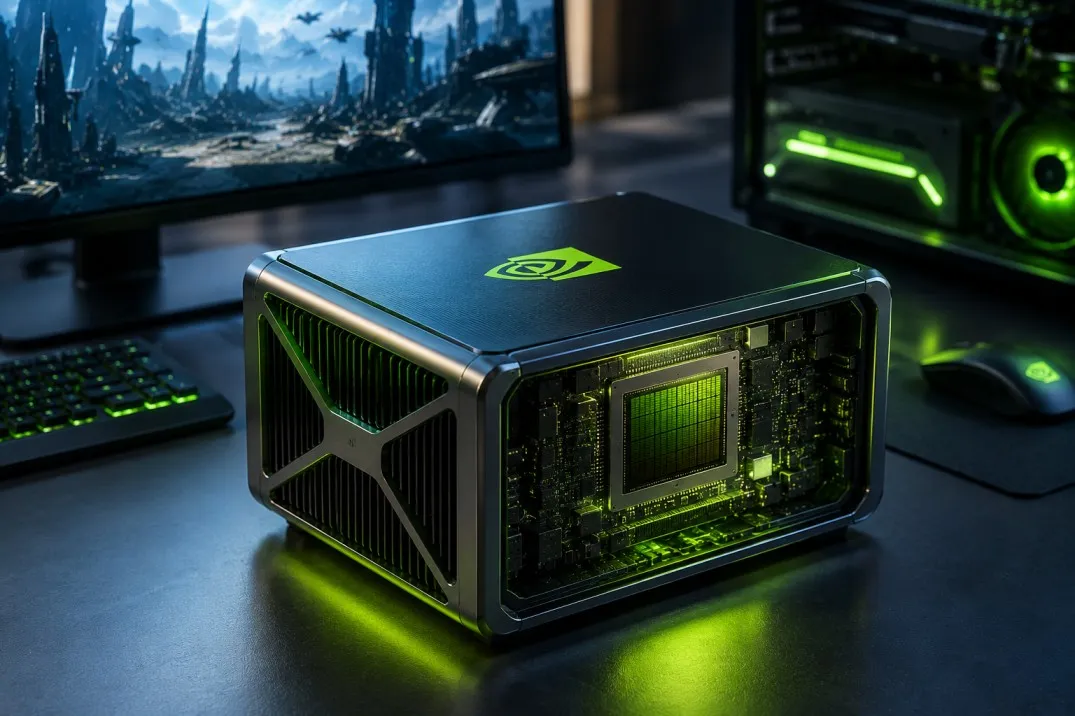
Nvidia just made one of its boldest moves in years, and it has nothing to do with a traditional graphics card. The Nvidia RTX Spark is a new superchip unveiled at Computex 2026, and it is being pitched as nothing less than a reinvention of the Windows PC. Combining AI compute, RTX graphics, and an entirely new chip architecture, RTX Spark is Nvidia's attempt to bring an Apple Silicon style shake-up to a market that has run on x86 architecture for more than forty years.
If you have seen the buzz online and are wondering what RTX Spark actually is, how it works, and when you can get your hands on it, here is the complete breakdown.
What Exactly Is RTX Spark?
RTX Spark is a new class of system-on-chip that fuses an ARM-based CPU with Nvidia RTX graphics in a single package. Nvidia describes it as the fusion of NVIDIA AI and RTX graphics, designed to power slim Windows laptops and small, ultra-efficient desktop PCs. Rather than being sold as a standalone processor the way you would buy an Intel Core or AMD Ryzen chip, RTX Spark will only be available inside prebuilt machines from major manufacturers.
Nvidia CEO Jensen Huang described the announcement in dramatic terms, saying the PC is being reinvented after forty years of simply launching apps. The pitch here is that RTX Spark machines will function less like traditional computers and more like a partner that runs tasks, generates assets, and writes code on demand, all while still being a capable gaming and creative machine.
The Specs Behind the Hype
Underneath the marketing language, the hardware specs are genuinely impressive. RTX Spark pairs a 20-core Nvidia Grace CPU with a Blackwell RTX GPU featuring up to 6,144 CUDA cores. It includes 128GB of unified memory connected through 600 GB per second NVLink C2C bandwidth, and delivers up to 1 petaflop of AI compute performance, all within a power envelope of just 45 to 80 watts.
To put that in perspective, Nvidia says the chip can run 120 billion parameter AI models locally, edit 12K video, render 3D scenes larger than 90GB, and play AAA games above 100 frames per second at 1440p resolution, with help from DLSS 4.5 and frame generation technology. Two games demonstrated on stage during the Computex reveal were Forza Horizon 6 and 007 First Light.
Built With MediaTek, Powered for Microsoft's Vision
RTX Spark, internally codenamed N1X, was developed in partnership with MediaTek, which contributed its expertise in high-performance CPU design, connectivity, and power efficiency. MediaTek also designed the proprietary memory controller supporting the chip's 128GB of ultra-high-speed unified memory, alongside power delivery systems aimed at maximizing battery life even under heavy workloads.
Microsoft is the other major partner here, and the collaboration runs deep. Together, Nvidia and Microsoft are building a native Windows experience tailored specifically for personal AI agents, including new security primitives and a framework called NVIDIA OpenShell designed to run agents securely on primary devices. This is less about adding an AI chatbot to Windows and more about restructuring how the operating system handles autonomous, on-device AI tasks.
A Lower-Tier Option: The N1 Chip
Alongside the flagship N1X chip, Nvidia is also introducing a more power-efficient variant called N1. While Nvidia has not officially detailed its cut-down specifications, leaks suggest it will use the same 12 and 10-core Grace CPU configurations with up to 2,048 CUDA cores, support up to 64GB of memory, and run within an 18 to 45 watt power range. This gives manufacturers a more affordable option to slot beneath the high-end N1X tier.
Confirmed Manufacturing Partners and Models
Nvidia has already lined up an impressive list of partners building RTX Spark-powered machines, including ASUS, Dell, HP, Lenovo, Microsoft Surface, and MSI, with Acer and Gigabyte expected to follow later. Specific confirmed laptop models include the ASUS ProArt P16, Dell XPS 16, HP OmniBook X 14, Lenovo Yoga Pro 9n, Microsoft Surface Laptop Ultra, and the MSI Prestige N16 Flip AI Plus.
In total, Nvidia has confirmed roughly 30 laptops and 10 mini desktop systems are in development. Larger tower-style desktops are not part of the RTX Spark lineup and will instead be reserved for the separate DGX Spark chip, which targets even heavier workstation-class workloads.
Release Window and Pricing
Nvidia has confirmed that RTX Spark devices will be available starting in Fall 2026, though an exact release date has not been announced and will likely vary by manufacturer. No official pricing has been released either, but early estimates from Morgan Stanley suggest the flagship N1X-powered machines will be priced around 2,899 US dollars, while the more affordable N1 configurations are expected to land closer to 1,799 US dollars.
Given that this represents a genuine architectural shift away from the x86 standard that has powered Windows PCs for decades, premium pricing is not surprising. Early adopters should expect to pay a noticeable premium for the novelty and capability this new chip platform offers.
How RTX Spark Relates to DGX Spark
If you have also heard about Nvidia's DGX Spark, you are not imagining a coincidence. Both chips share a very similar foundation, built around the same underlying GB10 superchip architecture. The key difference is the operating system and target audience. DGX Spark ships with Linux and is aimed squarely at AI developers, researchers, and data scientists who need a personal AI supercomputer for serious workloads, supporting models with up to 200 billion parameters.
RTX Spark, by contrast, ships with Windows and is designed for a broader audience that includes gamers, creators, and everyday AI power users. Some early hands-on testers have noted that hardware similar to RTX Spark, branded under the GB10 name, has effectively already been usable for tasks like running modern games at 1440p, suggesting the underlying capability has been validated well before the official consumer rollout.
Final Thoughts
Nvidia RTX Spark represents one of the more ambitious bets in recent PC hardware history. By introducing ARM architecture into mainstream Windows machines, backed by genuinely powerful AI and graphics performance, Nvidia is positioning itself to do for Windows what Apple Silicon did for the Mac. Whether the broader software ecosystem adapts quickly enough to take full advantage remains to be seen, but the hardware foundation being laid here is significant.
With Fall 2026 availability now confirmed and a strong lineup of manufacturing partners already on board, RTX Spark is shaping up to be one of the most closely watched hardware launches of the year, especially for anyone who cares about the future of AI-driven computing on Windows. Its combination of AI acceleration and advanced graphics capabilities could also influence how future video games review platforms benchmark performance, evaluate visual fidelity, and assess next-generation gaming experiences.
Frequently Asked Questions
What is Nvidia RTX Spark?
RTX Spark is a new superchip from Nvidia that combines an ARM-based Grace CPU with Blackwell RTX graphics, designed to power slim Windows laptops and compact desktop PCs built for AI, creative work, and gaming.
When will RTX Spark be available?
Nvidia has confirmed availability starting in Fall 2026, though exact release dates will vary by manufacturer and specific model.
How much will RTX Spark machines cost?
No official pricing has been confirmed, but early industry estimates suggest flagship N1X models could cost around 2,899 US dollars, with more affordable N1 configurations closer to 1,799 US dollars.
Can you buy RTX Spark as a standalone chip?
No. RTX Spark is only available inside prebuilt systems from manufacturing partners like ASUS, Dell, HP, Lenovo, Microsoft Surface, and MSI.
What is the difference between RTX Spark and DGX Spark?
Both chips share a similar underlying architecture, but RTX Spark ships with Windows and targets gamers and creators, while DGX Spark ships with Linux and targets AI developers and researchers running heavier workloads.
Can RTX Spark run modern games well?
Yes. Nvidia claims RTX Spark can run AAA games above 100 frames per second at 1440p resolution, aided by DLSS 4.5 and frame generation technology.
Which manufacturers are building RTX Spark devices?
Confirmed partners include ASUS, Dell, HP, Lenovo, Microsoft Surface, and MSI, with Acer and Gigabyte expected to release models later.